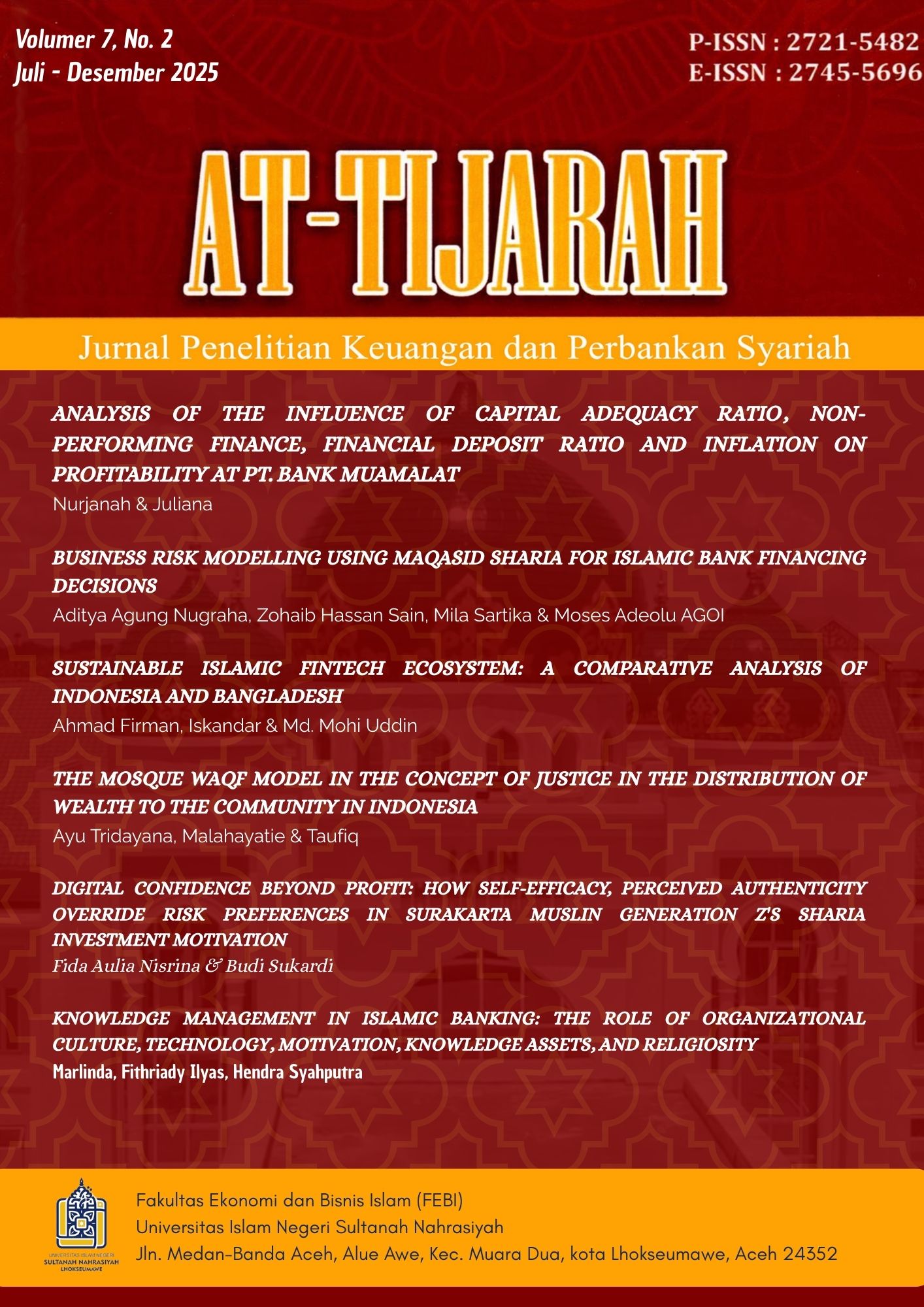
The Mosque Waqf Model In The Concept Of Justice In The Distribution Of Wealth To The Community In Indonesia
DOI:
https://doi.org/10.52490/at-tijarah.v7i2.6729Keywords:
Mosque waqf, distribution justice, productive management, economic inequality, indonesiaAbstract
This research examines mosque waqf management models in the context of wealth distribution justice in Indonesia, with the aim of understanding and mapping mosque waqf management practices on the islands of Sumatra, Java, and Kalimantan. The background of the problem raised is the inequality in the distribution of benefits of mosque waqf which is still consumptive and less productive, despite the enormous potential of waqf assets. The research method used is a literature review, with analysis of various relevant secondary data sources. The results show that mosque waqf management in Indonesia is still dominated by traditional approaches that prioritize physical development, while efforts to utilize assets productively are still limited. The conclusion of this study emphasizes the need for a more sustainable and productive mosque waqf management model to reduce economic inequality and improve community welfare
References
Abdullah, A., & Islam, H. (2018). Pengelolaan Harta Wakaf Masjid Besar Istiqamah Kota Bakti Kabupaten Pidie (Suatu Analisis Menurut Hukum Islam). 8(1), 59–76.
Abdullah, M. (2018). Waqf, Sustainable Development Goals (SDGs) and maqasid al-shariah. International Journal of Social Economics, 45(1), 158–172. https://doi.org/10.1108/IJSE-10-2016-0295
Arnum Puji Astuti,Malahayatie,Rahmawati. Analisis Swot Dan Bcg Pada Pemasaran Syariah Pada Usaha Kopi Di Kota Takengon, Jurnal Adz Dzahab, Vol 9 no 2 tahun 2024. https://doi.org/10.47435/adz-dzahab.v9i2.3316
Basar Dikurasyin. (2020). 1613536905554_Vol.7.No.2.Tahun 2020. ZISWAF: Jurnal Zakat Dan Wakaf, 7(2), 225–236. http://ejurnal.seminar-id.com/index.php/tin/article/view/905%0Ahttp://urj.uinmalang.ac.id/index.php/jfs/article/view/743%0Ahttp://repo.iain-tulungagung.ac.id/5510/5/BAB.pdf%0Ahttp://repo.uinsatu.ac.id/id/eprint/20596
BWI. (2017). Wakaf untuk Keadilan Sosial.
Devi agustina, & Renny Oktafia. (2021). Manajemen Pengelolaan Wakaf Tanah Masjid Jami’ Darussalam Desa Jatipayak Kecamatan Modo Kabupaten Lamongan Untuk Meningkatkan Perekonomian Masyarakat. Jurnal Tabarru’: Islamic Banking and Finance, 4(2), 380–393. https://doi.org/10.25299/jtb.2021.vol4(2).7364
Dewi, A. P., & Hakiki, M. I. (2023). Transformasi Digital dalam Industri Halal di Indonesia (Studi Implementasi Teknologi Blockchain dalam Proses Sertifikasi Halal). Indo-Fintech Intellectuals: Journal of Economics and Business, 3(2), 360–370. https://doi.org/10.54373/ifijeb.v3i2.240
Global Wealth Inequality Report. (2022). Laporan Ketimpangan. https://wir2022.wid.world/executive-summary
Habibah, A. (2024). Analisis Manajemen Wakaf dalam Pemberdayaan Masyarakat di Masjid Al-Munawwarah Kelurahan Penyengat Rendah Kota Jambi. 2(3).
Harjoni, Rahmawati, & Nola, S. L. (2025). Pengaruh Literasi Keuangan, Life Style, dan Locus Of Control Terhadap Perilaku Pengelolaan Keuangan Mahasiswa Ekonomi Syariah Febi Angkatan 2019. Jurnal BAABU AL-ILMI: Ekonomi dan Perbankan Syariah, 9(2), 173-179. https://doi.org/10.29300/ba.v9i2.5011
Kamariah, Sukman, & Nirwana. (2021). Problema Wakaf Di Indonesia. Ats-Tsarwah, 1(1), 59. https://e-journal.stishid.ac.id/index.php/ats-tsarwah/article/view/103%0Ahttps://e-journal.stishid.ac.id/index.php/ats-tsarwah/article/download/103/85
Lubis, N., & Sunandar, H. (2023). Interpretation of Waqf Distribution Verse in Islamic Economic Perspective. Enrichment: Journal of Multidisciplinary Research and Development, 1(1), 31–38. https://doi.org/10.55324/enrichment.v1i1.5
Muhammad A.A, F., & Rosidta, A. (2023). Peran Wakaf Dan Zakat Dalam Meningkatkan Ekonomi Masyarakat Indonesia. Lisyabab : Jurnal Studi Islam Dan Sosial, 4(2), 162–185. https://doi.org/10.58326/jurnallisyabab.v4i2.193
Muhammad, R., & Sari, A. P. (2021). Tantangan Optimalisasi Pengelolaan dan Akuntabilitas Wakaf (Studi Kasus di Propinsi Daerah Istimewa Yogyakarta). Jati: Jurnal Akuntansi Terapan Indonesia, 4(1), 79–94. https://doi.org/10.18196/jati.v4i1.9805
Nurul Faizah Rahmah, N. (2022). Manajemen Pengembangan Wakaf Era Digital Dalam Mengoptimalkan Potensi Wakaf. Al-Awqaf: Jurnal Wakaf Dan Ekonomi Islam, 14(2), 139–154. https://doi.org/10.47411/al-awqaf.vol14iss2.153
Nuryanti, Haniah Lubis, Muhammad Thahir Cheumar, F. M. (2024). Pengelolaan dan Pengembangan Wakaf Uang oleh Lembaga Nazhir di Kota Pekanbaru Nuryanti. 28–39.
Rahma, S., Shatrialdi, G., Islam, U., Sulthan, N., & Saifuddin, T. (2023). Al-Falah Kota Jambi Dalam Tinjauan. 3(2), 152–166.
Rahman, M. R. A., Hulaify, A., & Iman Setya Budi. (n.d.). Strategi Pengelolaan Wakaf Produktif Di Masjid Agung Syuhada Pelaihari. 1–3.
Razali, R., & Rahmawati, R. (2024). Hilirisation Agricultural Zakat as a Basis for Increasing Community Income. Management of Zakat and Waqf Journal (MAZAWA), 6(1), 1–18. https://doi.org/10.15642/mzw.2024.6.1.1-18
Redaksi BWI. (2018). Tantangan Wakaf untuk Keadilan Sosial. Badan Wakaf Indonesia. https://www.bwi.go.id/290/2008/12/02/tantangan-wakaf-untuk-keadilan-sosial/
Sulistiyo, B., Rasyid, F. A., & Saleh, C. (2024). Relevansi Prinsip-prinsip Hukum Ekonomi Syariah dalam Membangun Keadilan Sosial melalui Distribusi Ekonomi yang Adil. Ahkam, 3(1), 38–48. https://doi.org/10.58578/ahkam.v3i1.2478
Taufiq, M. (2018). M. Taufiq dan Muklisin Purnomo Model Pemberdayaan Aset Wakaf Masjid Secara Produktif Di Masjid Jogokariyan Yogyakarta. Jurnal Studi Islam Kawasan Melayu, 1(2), 129–139. http://ejournal.stainkepri.ac.id/index.php/perada
Venia, I., Yoesoef, Y., & Rahmawati (2024). Pengaruh Promosi, Gaya Hidup Dan Pekerja Terhadap Minat Masyarakat Menggunakan BSI LINK Di Kecamatan Muara Dua Kota Lhokseumawe. Borneo Islamic Finance and Economics Journal, 4(2), 99-113. https://doi.org/10.21093/bifej.v4i2.9441
Wenny Safitri, A. (2020). Model Kelembagaan Nazhir dalam Pengelolaan Wakaf Produktif. Thesis, 2507(February), 1–9.
Zaenurrosyid, A. (2016). Islamic Philanthropy Based on Property of Mosque Waqf ( Study on the Management Model Waqf of Historic Grand Mosque in Java ) Filantropi. Jurnal Bimas Islam, 9(3), 521–556. https://journals.ums.ac.id/index.php/jisel/article/view/14870/6916
Downloads
Published
How to Cite
Issue
Section
License
Copyright (c) 2025 Ayu Tridayana, Malahayatie, Taufiq

This work is licensed under a Creative Commons Attribution-ShareAlike 4.0 International License.